
Archive
Activation.
Preserve the source. Discover the connections. Bring the archive into the present.
Recordings, photographs, manuscripts and films hold more than a collection of files. We help make them accessible, understandable and ready for new creative work.
Research and experiments with the Alan Watts Organization show how an archive can move while keeping its sources in view.
Proposed collaboration model
Archival Alliance.
An archive holder, a creative lab and distribution partners can come together around one production.
One production SPV per project
A special purpose vehicle brings the partners together for a specific work. The archive holder keeps ownership of the source material and licenses what the production needs. The partners agree how to share the new work.
- Archive
- Preserves the collection and approves use.
- Lab
- Researches, prototypes and produces.
- Market
- Brings the work to audiences and venues.
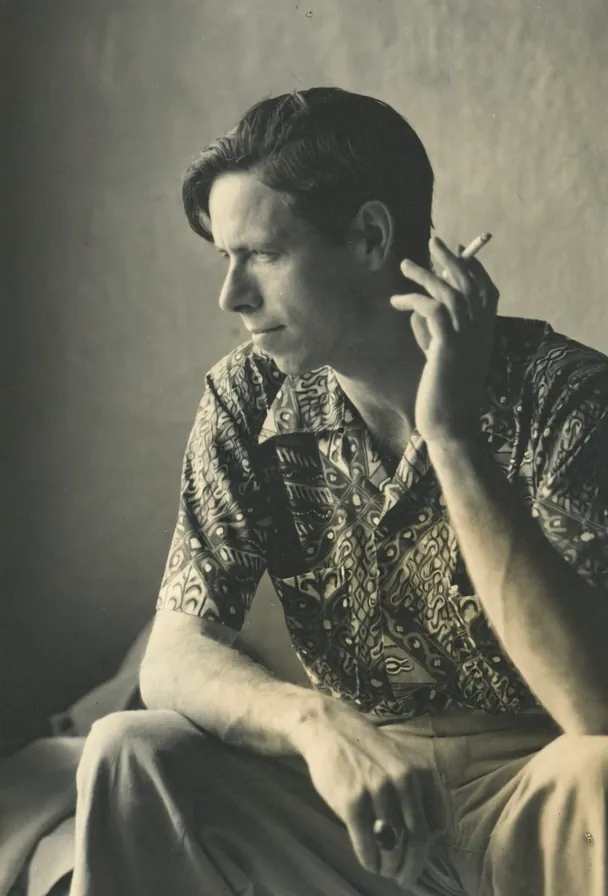
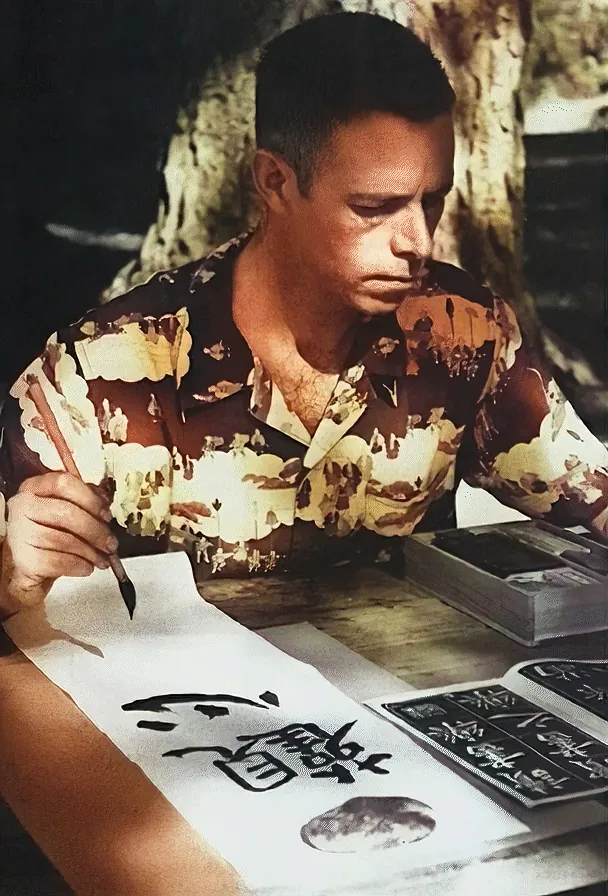
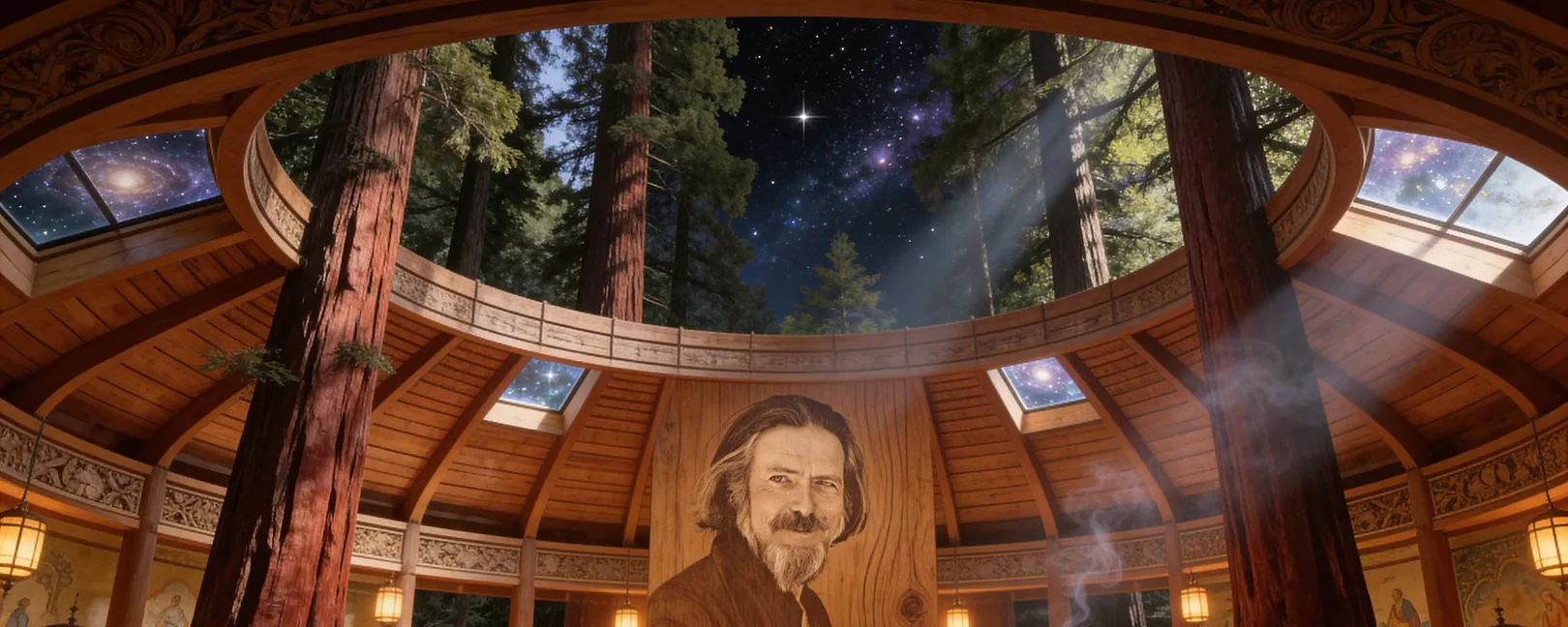
An archive that still speaks,
and a studio that makes it move.

- The archive
- More than 500 hours of recorded talks
- Stewardship
- Mark Watts and the Alan Watts Organization

- Film & animation
- Restoration and new films
- Experiences & research
- Domes, installations and tools for archives
An archive you
can explore.
Find a passage, follow a theme, return to the recording. Analysis becomes useful when you can see where an answer came from.
Transcribe & timecode
Connect the words to the recording, down to the moment they were spoken.
Index & catalogue
Organise subjects, works and references so the collection can be navigated.
Retrieve & cite
Bring back relevant passages with their sources attached.
Review & connect
The archive’s keeper reviews what becomes part of its shared knowledge.
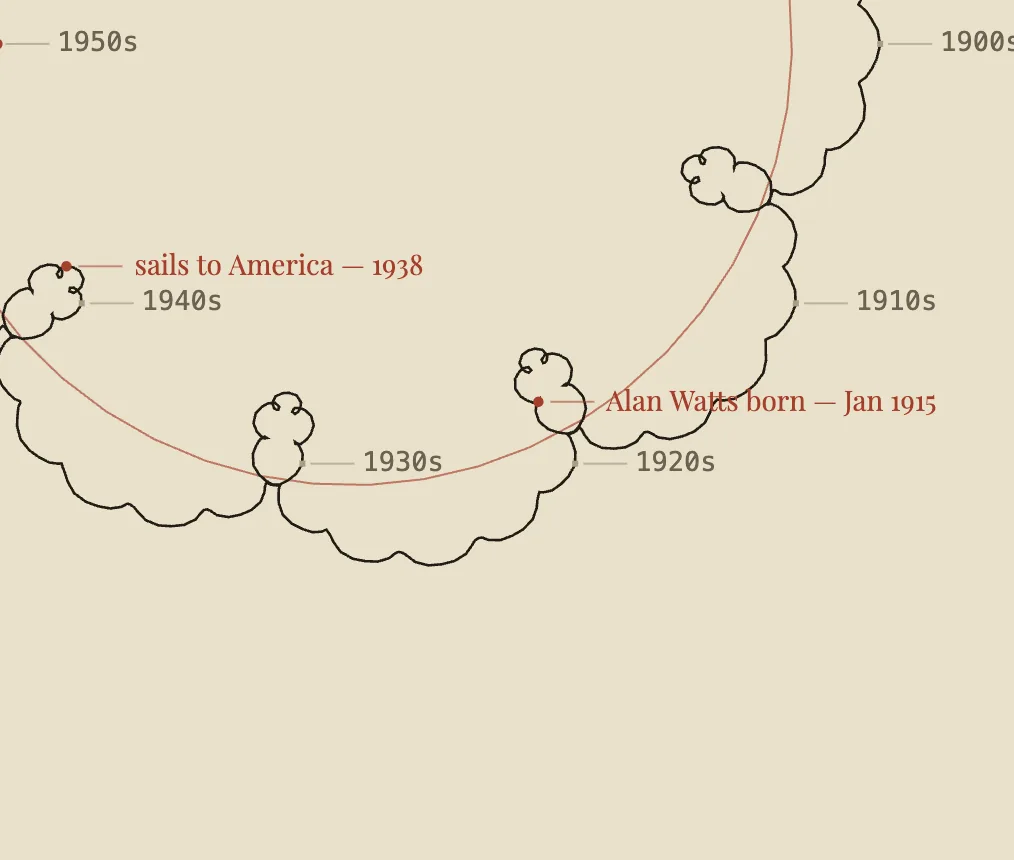
Research example / Coilendar
A source for
every answer.
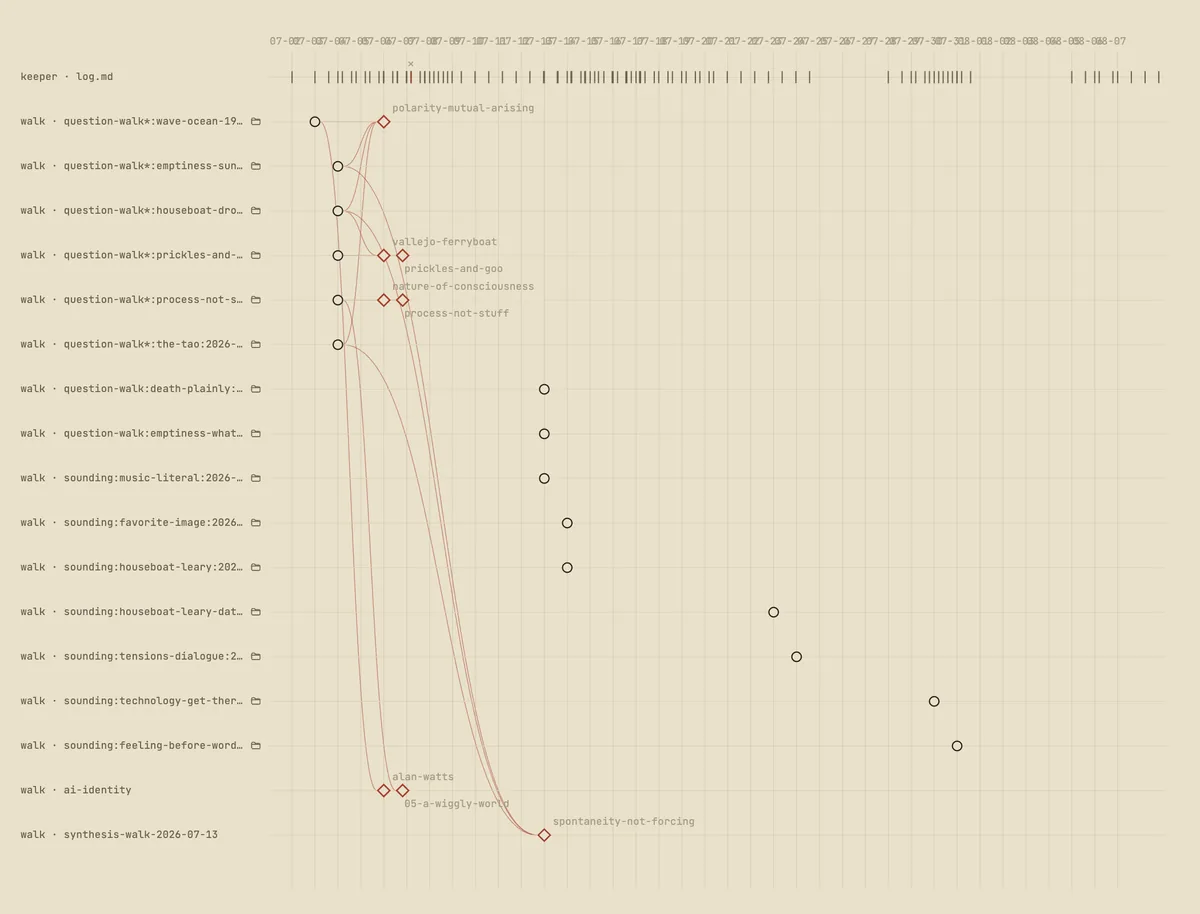
In Coilendar, questions become walks through the tapes. Quotes are checked against transcripts, and connections can be traced back to their sources.
Independent research walks can suggest shared structure. The archive’s keeper decides what is committed.
Developed by the Alan Watts Organization — Giulio Trichilo and Mark Watts — with advisory from 204.ai. Closed-alpha research, as presented in October 2026.
Preserve what
makes it original.
Restoration, interpretation and newly generated work serve different purposes. Each starts with understanding the material and its limits.
Assess the collection
Review the condition, formats, available context and intended uses before choosing a treatment.
Restore with care
Restore damaged photographs, stabilise or upscale footage, and assess colourisation against period references. Keep the original available for comparison.
Keep the trail
Carry source references and treatment notes into the working collection and delivery.
From a photograph
to a living picture.
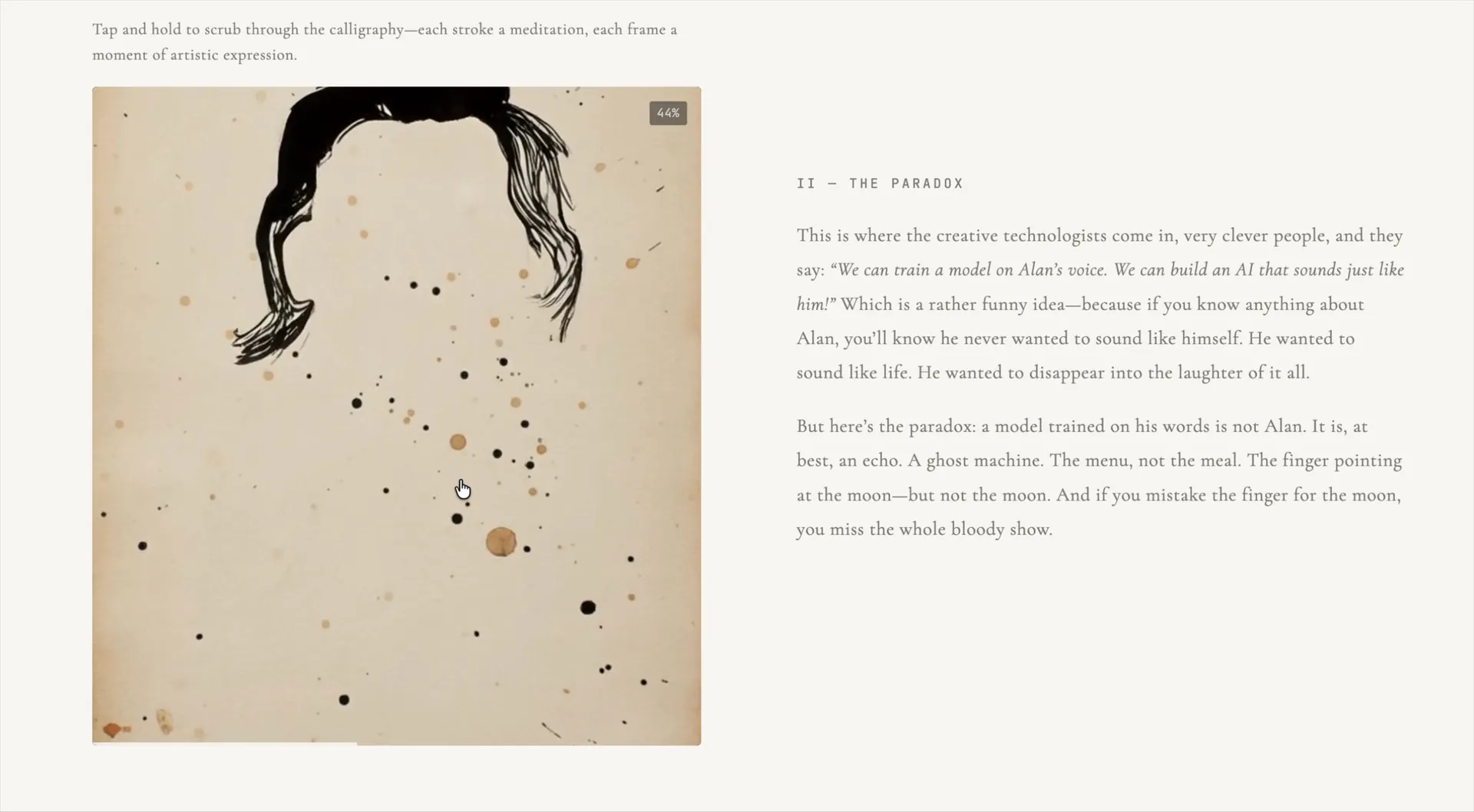
Each piece begins with an archive photograph. The movement is new; the original image remains the reference. Select either photograph to play the experiment.
Archive photographs: Alan Watts Organization. Image-to-video experiments: 204.ai with AWO, published in the 2025 article.
Where memory
learns to dance.
The interactive article behind the experiments asks how an archive can be restored, recontextualised and animated with care.
The archive holder
stays in control.
- Sources stay visible
- Research points back to a page, photograph or timecoded recording.
- New work is identified
- A living picture is described as generated motion, rather than presented as historical footage.
- People review the result
- Curators and archive holders guide interpretation and what is shared.
- Research has its own role
- Coilendar is AWO’s research platform. The service we offer is a tailored pilot on your collection.
Start with
a small collection.
A set of recordings, a photographic collection or a group of films is enough to define a pilot. Together we choose the material, the question and the output.
- Collection and condition assessment
- Transcription, timecodes and indexing
- Research with source references
- A restoration or creative experiment
- Review and a plan for what comes next